
The Thing I’ve Been Avoiding
Or: Puff Pastry - is homemade worth the effort?

Take it easy
When I started researching and reworking the historical recipes in Der Elegante Theetisch for my next cookbook project, I approached it rather like a child faced with a plate of unfamiliar food. I picked out all the bits that appealed to me most: the easy-to-love tidbits, the ones that felt accessible to me and, later, to my readers. The recipes that were quicker to replicate, quicker to research, quicker to understand. Then I worked my way through to those that needed a lot more chewing, a lot more preparation.
What’s left on my plate now are probably the most delicious morsels of all. And yet I’ve been pushing them to the edges, poking at them with a fork every now and then, and dreading the moment I finally have to dig in.
I’m talking about the puff pastry creations.
First of all: homemade puff pastry. Have you ever made it? I haven’t either. It carries an aura of dread, commonly described as notoriously difficult and full of points of failure. I’m a natural cook but an average baker, which is a bad combination when faced with something this skilled and exacting. And butter is VERBOTEN due to Morbus Bechterew - so it is plain torture baking something so flaky, crispy, fragrant, melt in your mouth delish (I hope!) and just be able to nibble a teeny tiny test corner.
On my desk sits a teetering stack of professional reference works, and it looks less like inspiration than a mountain of doom. I know I can climb that Everest, but I also know it will take preparation, patience, and no small amount of nerve.
Second of all: who will actually make puff pastry from scratch?
If I, a person actively inspired to research and recreate centuries-old recipes from vague and often maddeningly convoluted instructions, stop dead at the idea of making a frangipane tarte entirely from scratch, what chance do my readers have of feeling invited in rather than shut out?
I’m already culling many recipes from the original Elegante Theetisch for reasons of space or practicality. Some will likely find a home in future books—perhaps one centered on ice cream, perhaps one on drinks. My publisher suggested leaving out the puff pastry recipes altogether. They stopped including puff pastry in their own seminal reference works decades ago, which tells you something.
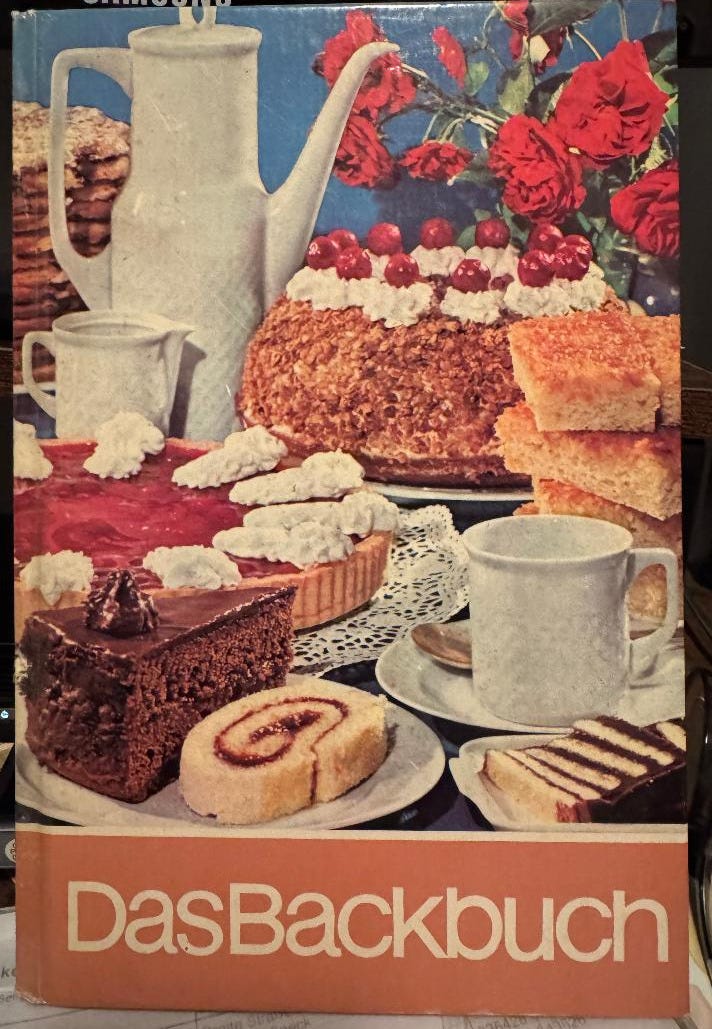
If I include it, will my readers put the book down in horror and run away?
And yet….
If anything, these recipes demonstrate Le Goullon’s mastery at its most impressive. Puff pastry is exactly the kind of thing that reveals the true scale of his skill, especially under the conditions of a historical kitchen.
No refrigeration. No freezer. At best, a cool stone in a root cellar.
To make even a simple puff pastry tarte filled with fruit preserves, a cook of his era would have needed to do far more than mix flour and butter. Sugar had to be cut and ground by hand. Butter had to be churned, preserved, and later washed in cold well water to remove the salt before it could be used properly. Fruit had to be pitted and preserved, which itself meant yet more labor and yet more sugar to cut and grind. Flour had to be kept dry and sifted to the proper degree. Baking trays had to be ordered from a smith or tinsmith. Depending on the household, someone might even need to instruct other workers in how to build and maintain an ice house. And then, of course, there was the oven: the fire had to be built, judged, and tended with the sharp attention of a hawk.
Under those conditions, puff pastry wasn’t simply a recipe. It was a giant feat of organization, labour, skill, and nerves of steel.
I KNOW from my years of experiments with Monsieur Le Goullon’s recipes that they are deeply delicious and worth the effort. Puff pastry simply belongs to his repertoire, and it was a core of fine baking in his period. If I want to understand historical baking properly, I cannot keep pushing it to the edge of the plate - even if the recipes ultimately may not make the editorial cut.
Dig in!
So really, in comparison, I have it easy.
I have refrigerated and ready to use butter. I have granulated sugar, finely milled flour, dependable ovens, freezers, a temperature controlled kitchen and a granite slab I picked up years ago for just this use. I have reference books, video tutorials, and the luxury of failing privately in my own kitchen without disappointing an entire court or household.
My homework is overdue, it’s Sunday night and I need to get out of my own way and just do it.
Not because every reader will go on to laminate butter into dough, but because some recipes are worth confronting precisely because they intimidate us. Because they remind us that the cooks that came before us were solving problems, managing materials, and producing elegance under conditions that would make most modern bakers weep.
So yes, puff pastry remains there on the edge of my plate, still the thing I’ve been saving for last.
It’s time to dig in.
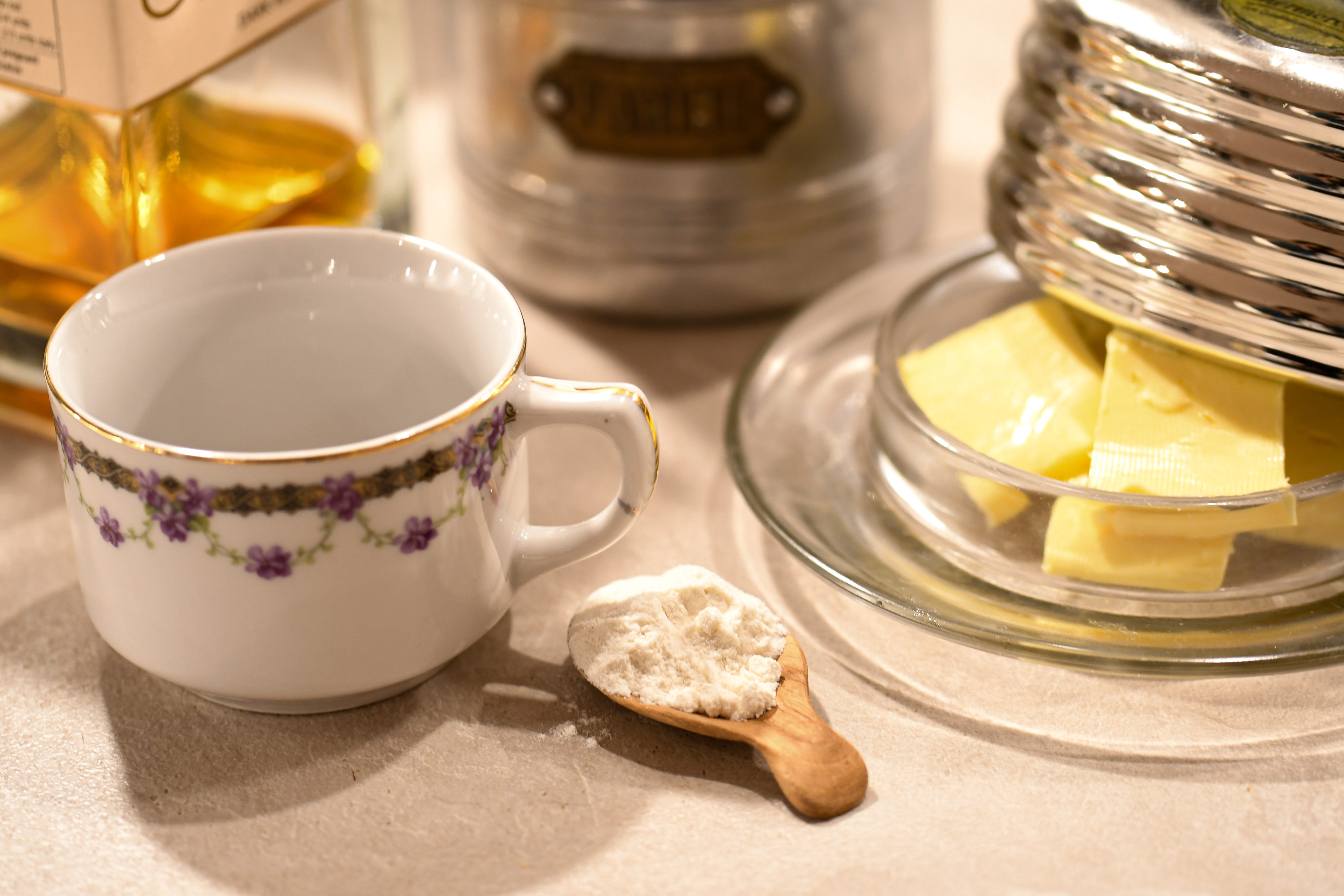
The Basic Recipe
500 g fine flour
500 g butter
1 egg
2 teacups of fresh ice water (so, we can assume at least 200–250 ml)
2 tablespoons cognac
Sounds simple, right?
The Directions
Le Goullon’s directions then proceed to stretch across two full pages, beginning with the instruction to work the dough until it has the same consistency as the butter—which is, of course, wonderfully vague.
Because before he gets there, he spends about half a page explaining how to wash the butter free of its preserving salt in summer, plus a second method for washing it in winter. In the end, the butter must be cold, firm, and zäh—which in this case means tough or supple—but not so cold that it breaks.
Yes. Crystal clear now. Thank you.
Once I have mixed the dough, I am to roll it out on a straight table to the thickness of a little finger, place the perfectly tempered butter in the middle, and fold the dough over it from all four sides. Fine. No problem.
Then I am to roll the dough thinner until it has the diameter of a pipe stem and the length of that same long table. After that, I am to fold it back together so that both ends meet in the middle. Which ends? The long ones or the short ones? No matter. Rest it, and repeat this process four times in total.
Le Goullon warns that the laminating must be done with the utmost care, or else the butter will be “burnt through” and lose the strength to lift the dough. Not quite a full explanation of the science behind lamination, but all right.
He also specifies that this should be done in a root cellar or wine cellar in summer, makes sense, and in a tempered room in winter. Which is to say: not warm.
Not warm at all.
In one of his other books, written as a guide for servants and Hofmarschälle, Le Goullon explains that rooms for entertaining guests should not be overheated, but kept at a cosy and comfortable 18°C (64.4°F). Eighteen degrees! Above 18°C, according to him, guests will start to sweat and feel uncomfortable. I’d hardly consider that ballroom at the breaking point to scathingly hot; at 18 degrees I am wearing my Stanfields thermal underwear and layering up like an onion.
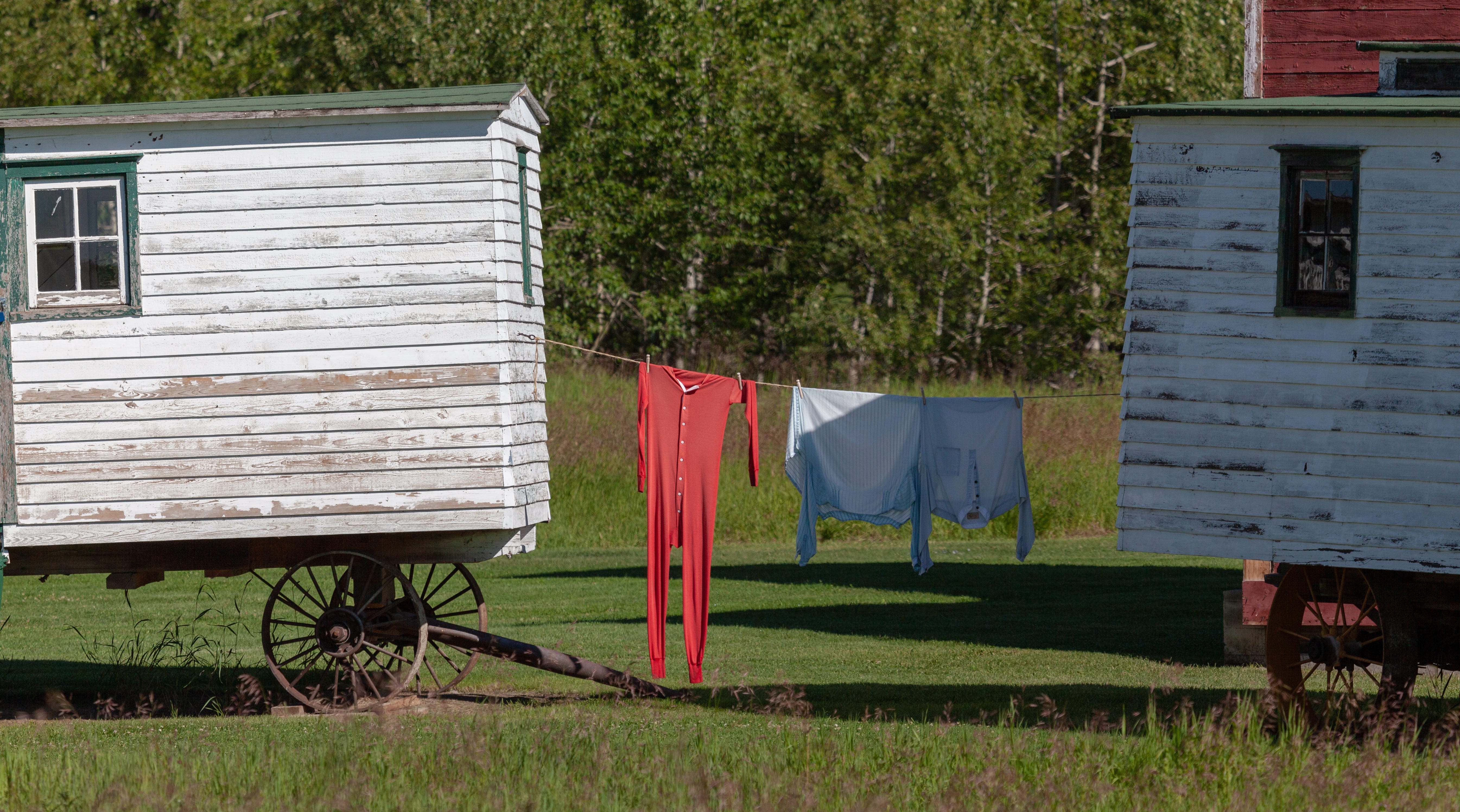
That’s 3-5 degrees cooler than our rooms today, and about 15 degrees cooler than this Canadian prairie girl ever wants to be. Winter trauma, you know.
So a “temperate room” in winter would, in practice, be about as chilly as that root cellar: 10-12°C.
I am, in no way, cooling my kitchen down to that. But I will be resting the dough in the fridge in between.
“Alles in Butter.”
My brunch guests are gone, the dishes done, the family is asleep, and I am left alone with my assignment, buzzed up on coffee and determined to finish my homework before morning: one historical puff pastry and no butter catastrophe.
It’s going to be an all-nighter. Wish me luck that everything will be “Alles in Butter.” (Literally translated as “everything is in butter”, meaning “everything’s fine,” “all is well,” or “we’re good.”) and not just covered in butter.
At least this time my efforts will end in something delicious and useful, unlike tenth-grade algebra.
I’ll report back!


the suspense is killing me!!