
Aspiring
A quick asparagus salad in between writing and researching

My mom, God rest her soul, used to tell the story of how I once stuffed my cheeks full of walnuts, like a squirrel tucking away provisions for the winter. I kept adding them one at a time until there were so many I couldn’t swallow, couldn’t open or close my mouth any further, and she could hardly pry them out.
Seems things haven’t changed much since I was four.
Lately, my cheeks have been just as full: a full-time job, the start of workshop season, two MAJOR writing projects, this column, and some big-time meetings and photography deadlines. I didn’t know which nuts to pry out first so I could start chewing.
Add a splurt of Morbus Bechterew-related eye inflammation to the pile, and there hasn’t been much chewing at all—at least in terms of writing.
Now that the inflammation is down, I’ve pried out three walnuts: sending off my paper about the history of my family’s Hardogna lefse recipe to a historical culinary association, making dinner, and writing this column—which, naturally, turned into a column about making dinner.
What’s for Dinner?
I love to cook. I love to teach people how to cook. I love exploring everything about food. But do I feel inspired every single evening about what to cook for dinner?
Nope.
Considering I’ve been cooking dinner for myself and others since I was at least 13—give or take the days I didn’t cook—that amounts to about 41 years of making dinner. At an average of 315 dinners per year, I may have cooked around 12,915 small dinners for one to 5 people.
Add the dinners I’ve cooked professionally, and that might bring the number up by another 822,915 seperate meals. Oh, and I forgot the cooking classes and caterings over 30 years. Another 200,000?
I can’t recall cooking almost a million different dinner dishes. At some point, certain dishes WILL repeat themselves.
Thankfully, it is asparagus season, which opens up a whole array of possibilities.
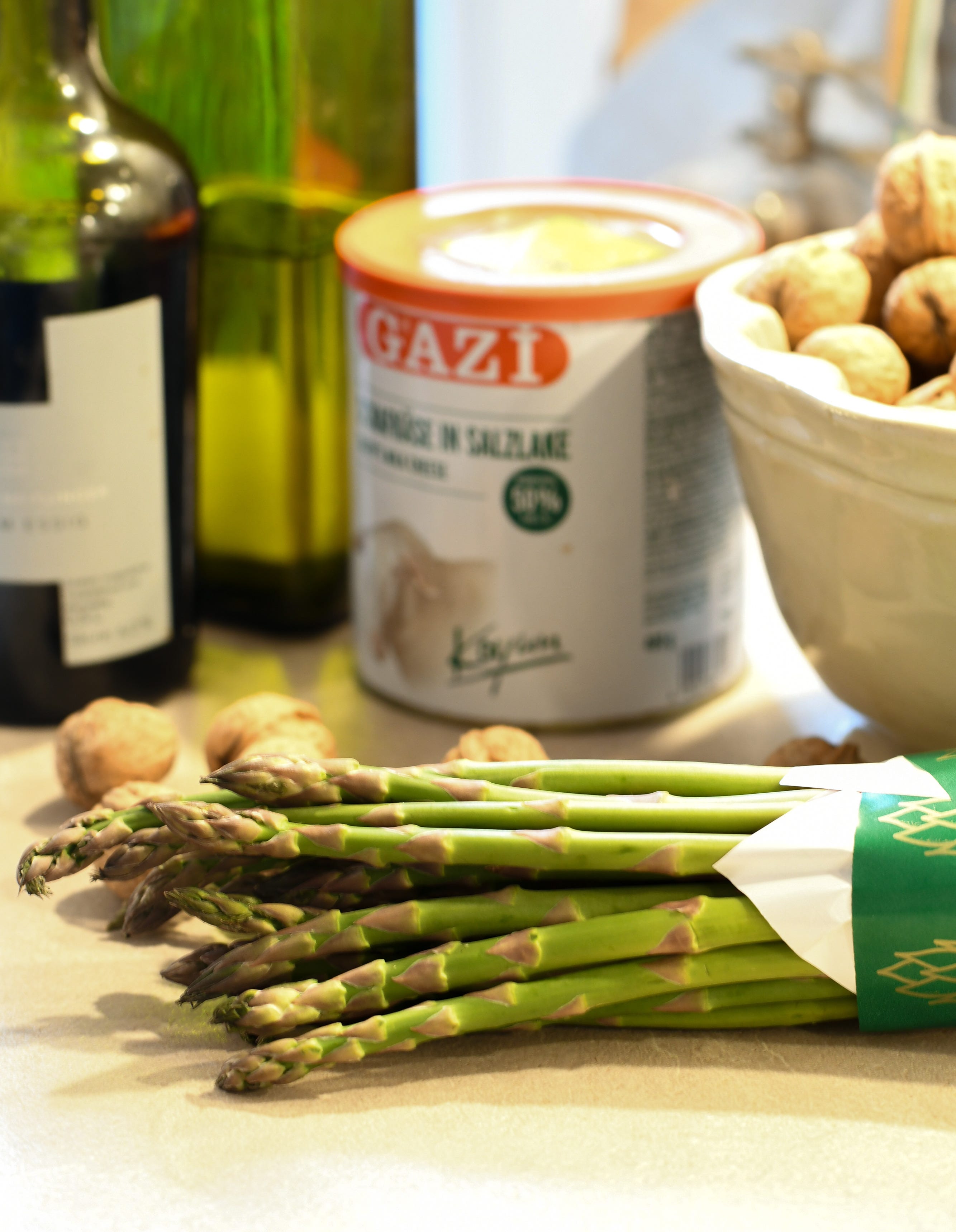
Asparagus Season
Germans go crazy for two things after a long, grey, damp winter:
Sunshine
Asparagus
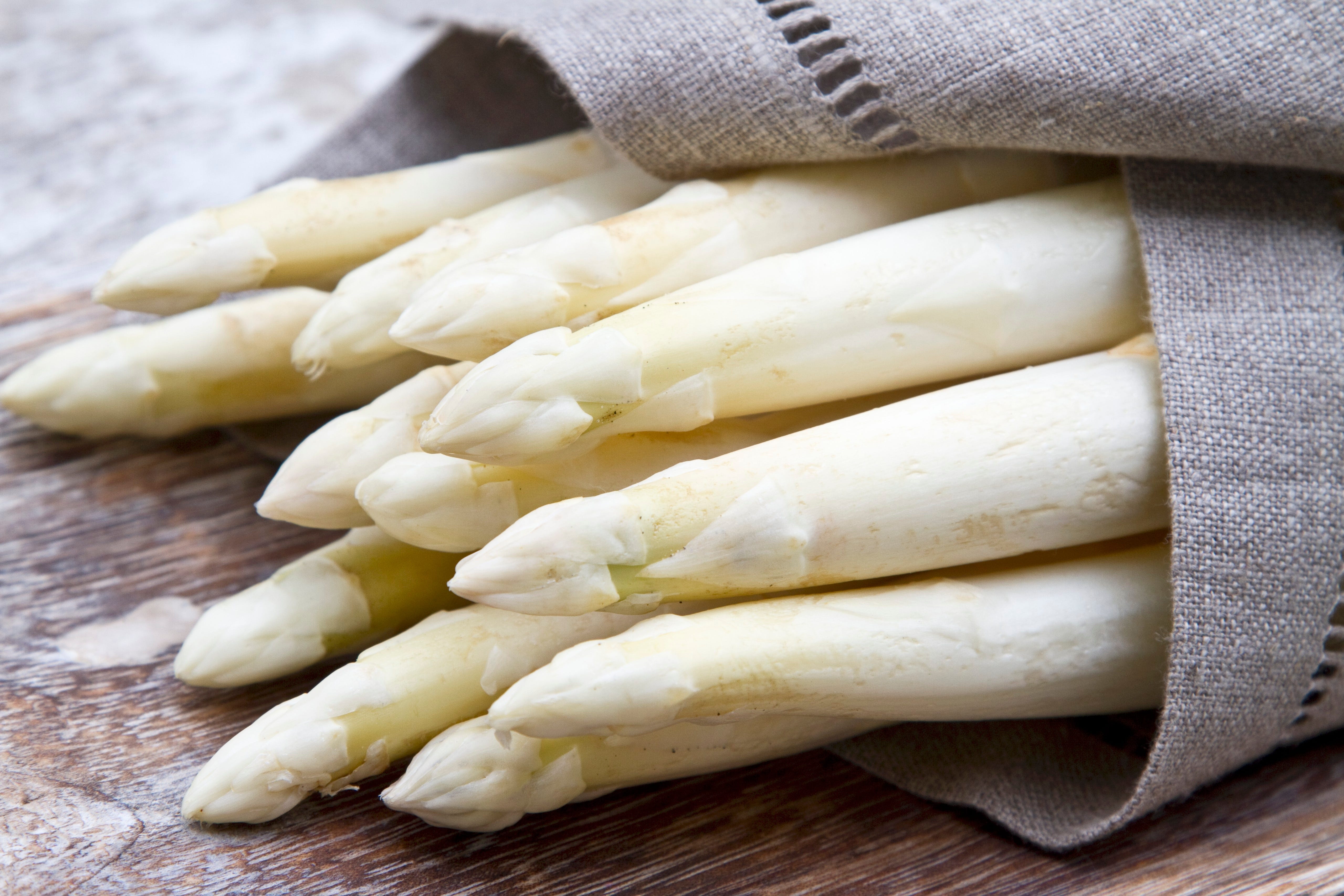
Particularly, they love the pale white stuff. The paler the better; slightly purple or greenish tips are now considered to be of lower quality and are sold for a lower price.
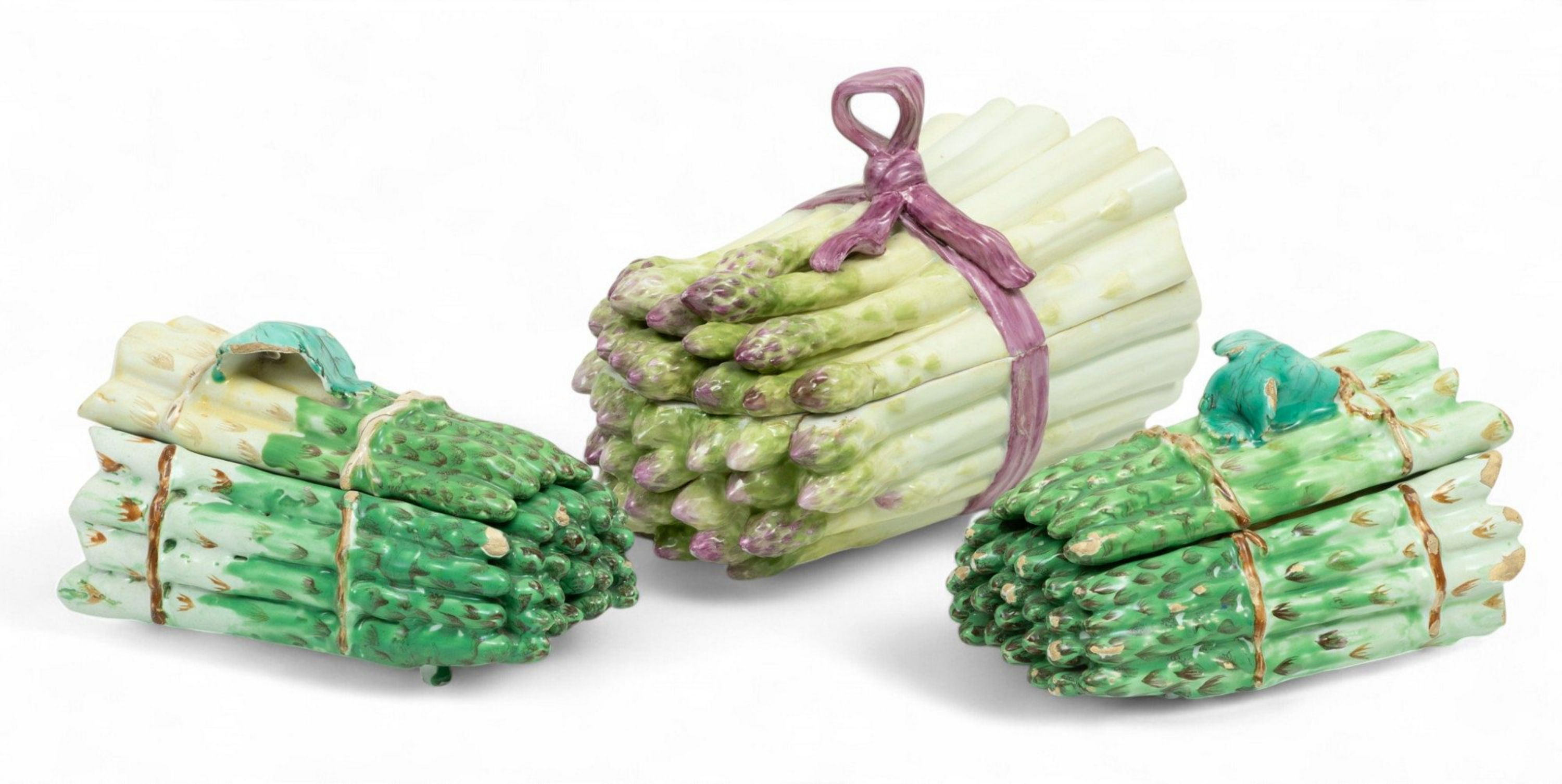
Not only porcelain was once dubbed “white gold”; asparagus, too, was once the stuff only aristocrats could afford. For centuries, it was astonishingly expensive and associated with refinement and celebration. It was even immortalized in porcelain.
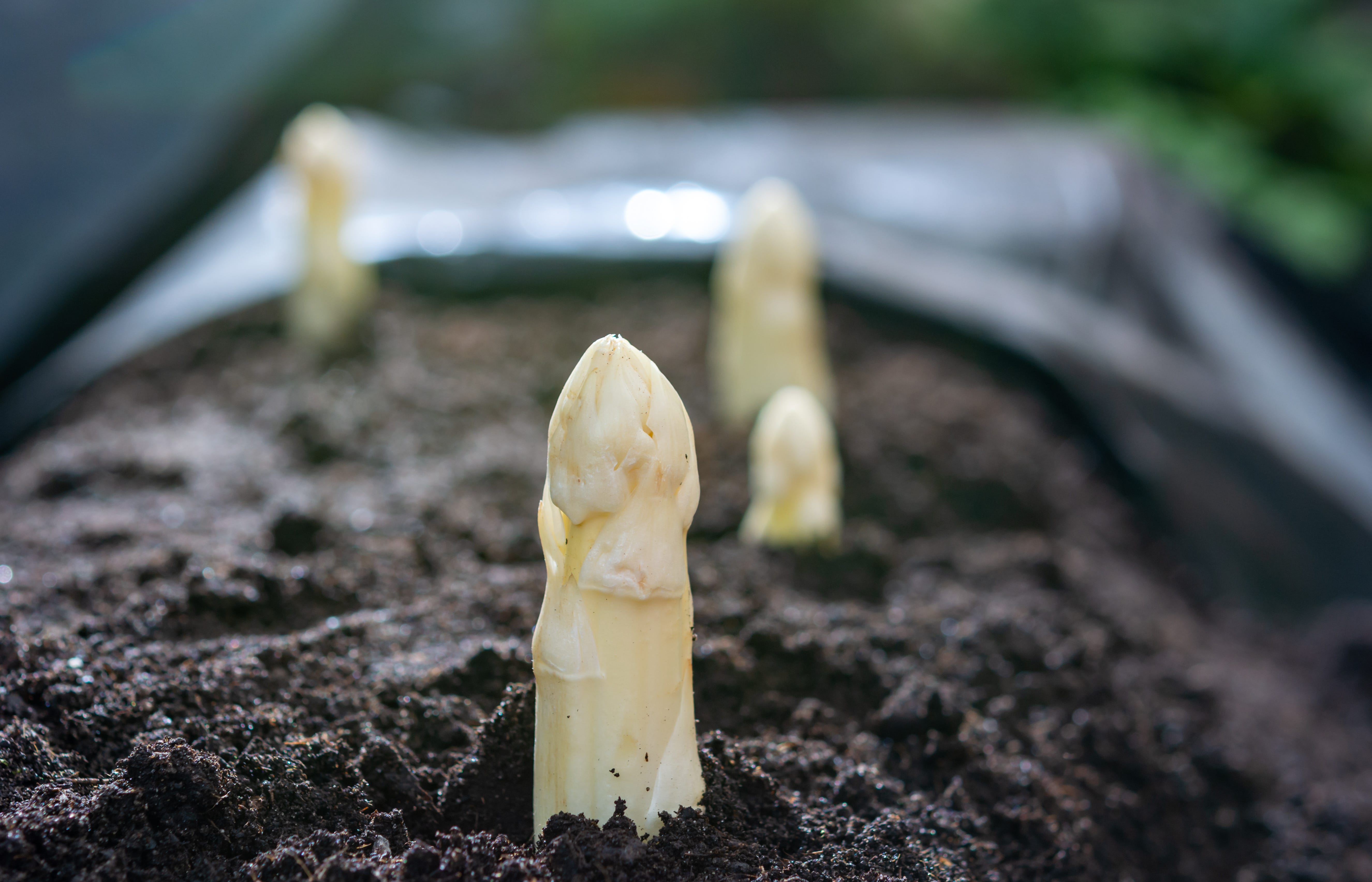
It is still labor-intensive to grow and harvest, and appropriately pricey. The stalks are buried under mounds of soil to keep them as pale as an Irish girl on the beach.
Asparagus season is short and intensely anticipated, usually running from April to St. John’s Day on June 24. Along with rhubarb and certain wild herbs, it is one of the first truly fresh local foods of spring. Even though almost everything is available all year round, Germans still tend to embrace seasonality food calendars:
-asparagus season
-strawberry season
-chanterelle season
-cabbage season
-goose season around St. Martin’s Day and Christmas
-And for us Thüringer citizens: the opening of Bratwurst grilling season, which ended this year on March 27 and began again on March 28.
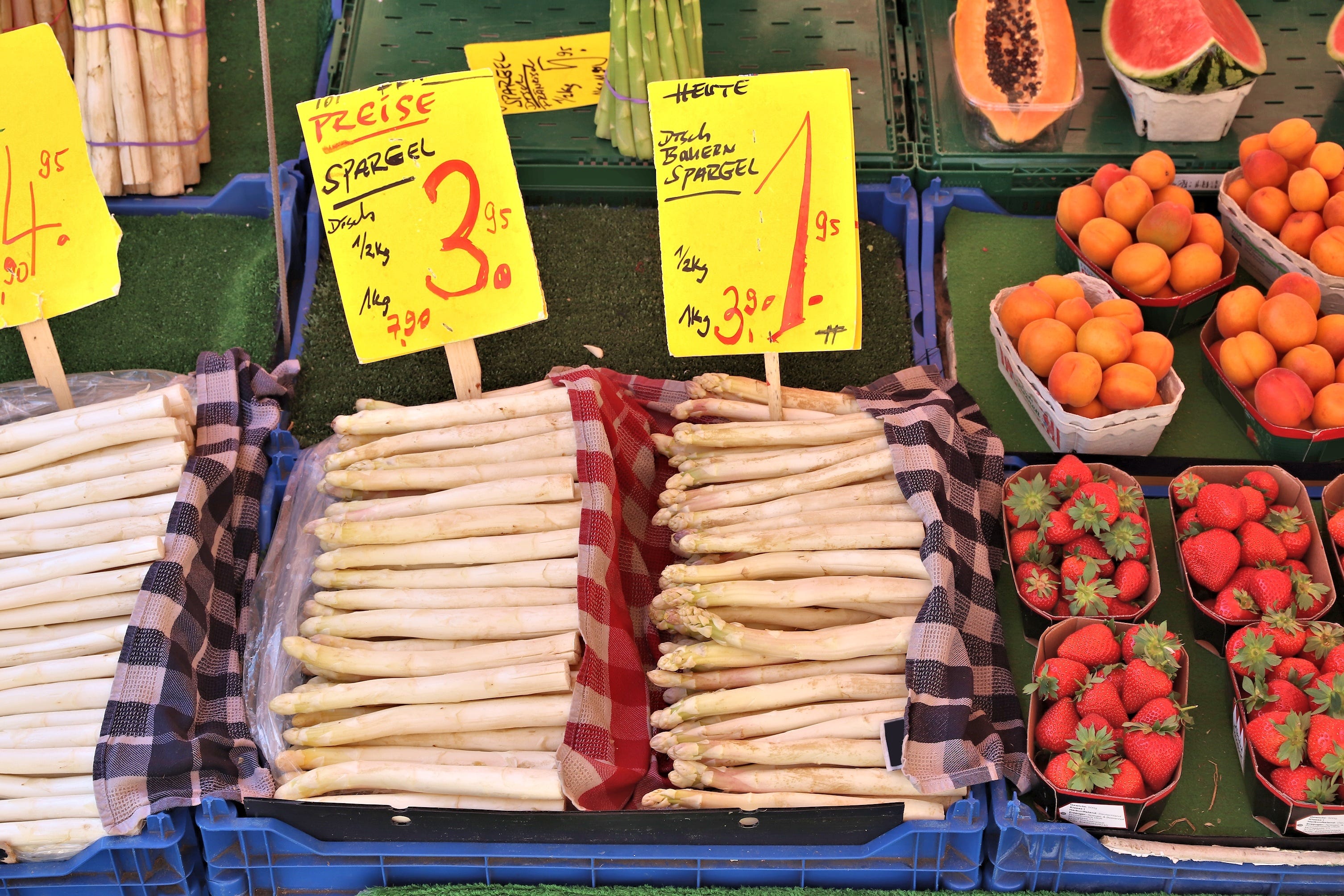
Asparagus season signals abundance, sunshine, eating out with friends in beer gardens, outdoor markets and roadside stands, and the end of heavy winter cooking. Theoretically.
Germans typically love to eat their asparagus as a cream soup, or steamed and served by the half kilo with new potatoes, drawn butter, hollandaise sauce, schnitzel, smoked ham like Schwarzwälder Schinken, or even steaks.
Hardly light fare.
The process of “bleaching” the asparagus is supposed to make it more delicate and tender. I seem to always buy the wrong stalks and end up with a mouthful of fibers AND mush, no matter how well I peel them or how many different types of steaming pots and methods I try. I think it is one of those things you absorb with mother’s milk or part of genetic coding.
I do like white asparagus raw as part of a salad, and then use the peels to make a syrup to drizzle over strawberries—yes, really, a lovely combo—served with vanilla ice cream or panna cotta. Or, for a real surprise, use the sirup to make the ice cream or panna cotta.
Not to be confused with asparagus-shaped ice cream, which was a giddy trompe-l’œil amusement during Georgian and Victorian times.
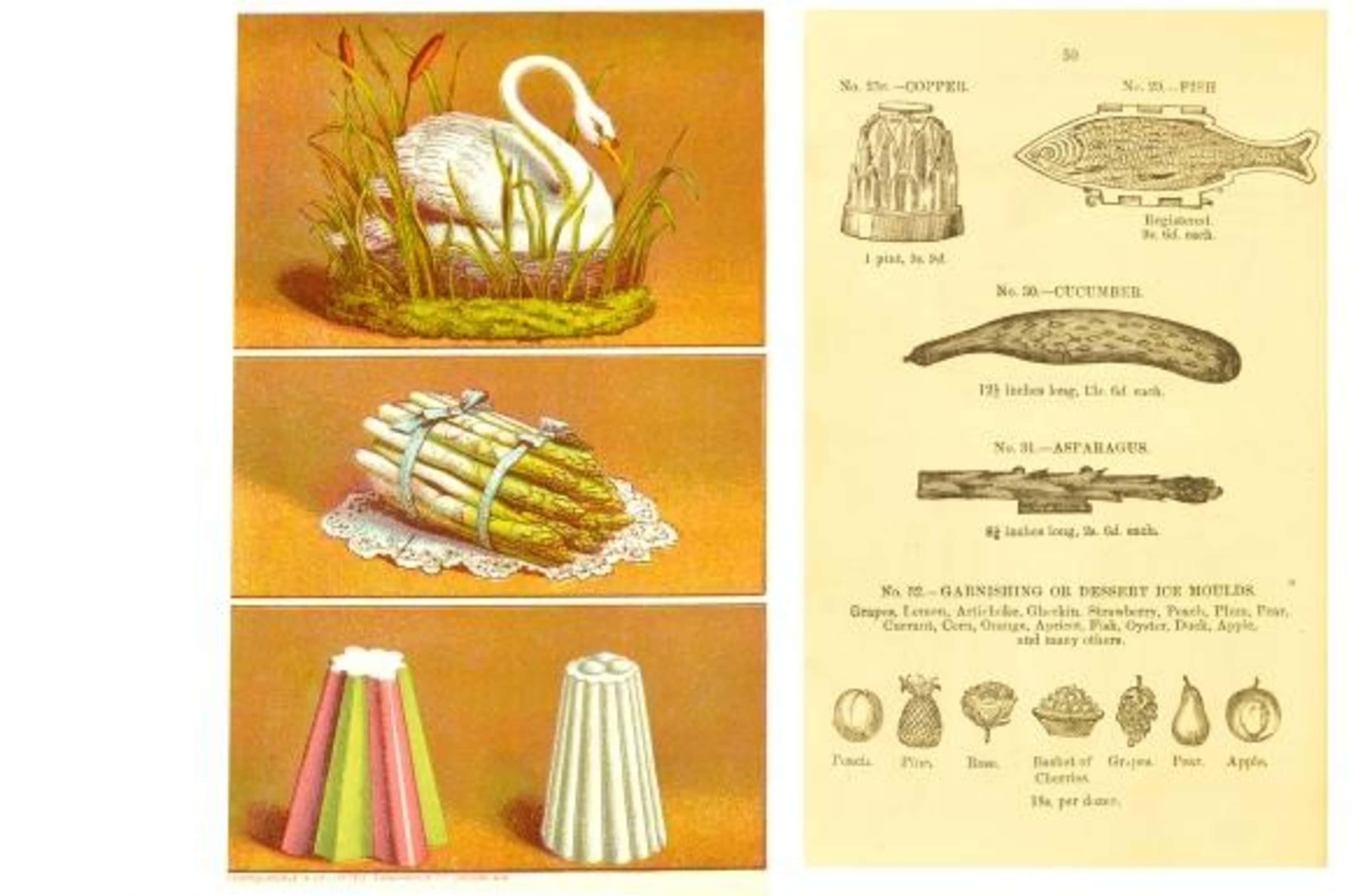
I dream of finding enough asparagus stalk moulds to create a proper bundle myself, but they are quite rare. The British food historian Ivan Day owns enough to recreate Charles Elmé Francatelli’s 1852 recipe for “Imitation Asparagus”:
“To produce this fancy ice you will require at least eighteen asparagus moulds made in pewter.”
To see a picture of Mr. Day’s moulds, link to Instagram here.
Or maybe I will have luck in finding an asparagus pudding form one day:
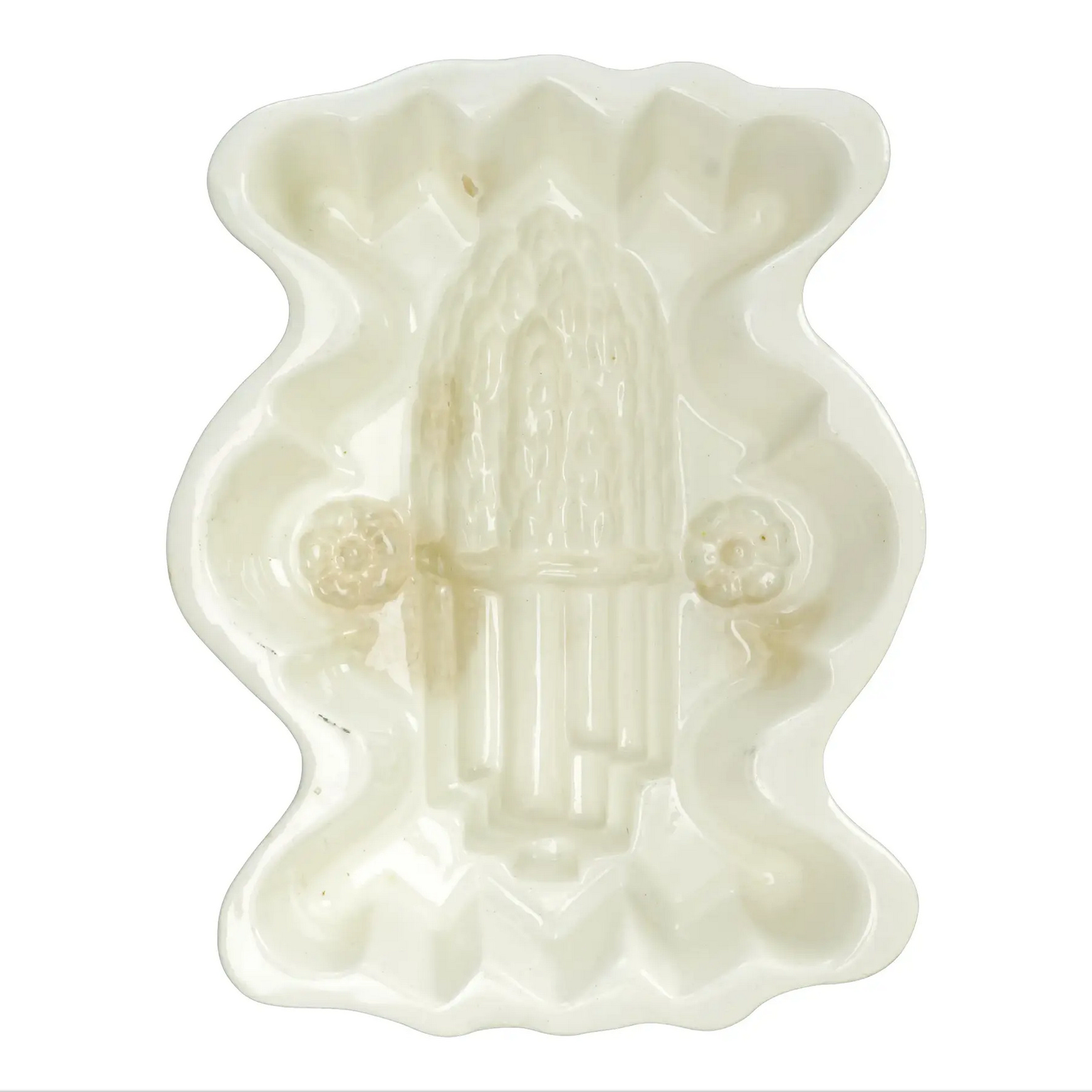
Although asparagus ice cream and panna cotta really are quite oddly yummy, these early recipes contained no asparagus at all. Instead, a basic pale pudding or ice cream mixture would be divided and tinted appropriately to resemble asparagus spears. Sometimes the moulds themselves were painted to heighten the illusion—not always with what we would now consider food-safe colouring.
The entire point was edible theatre, designed to delight dinner guests with illusion, luxury, and a touch of absurdity. I’ve produced some historic trompe-l’œil ices and puddings - as well as taken part in some splendid workshops with Ivan Day where we made objects like tamarind ice cream “pies” or bergamotte ice cream “lemons”.
Maybe I need to get out more, but really, they are just as much delightful fun as 250 years ago!
Back to the healthy side….
But really, I am a huge fan of green asparagus. A fraction of the price, more flavour, less work. That’s really a win, win, win situation. No peeling, just snapping off the woody ends of the stems- then the rest is just as quick and simple. Pop them into a quiche or omelet, sauté or steam them for a side dish, cut them raw for salads, add them to soups, grill them up and serve them with salmon, or, as in this dish, toss them with olive oil and some aromatics and throw them into the oven for about 15 minutes. No heavy sauces or butter necessary at all, which makes this whole dish anti-inflammatory friendly!
Warm Roasted Asparagus Salad with Spring Herbs
1 bunch green asparagus
olive oil for drizzling
a handful of walnuts or cashews
salt and freshly ground pepper, herbal salt
a pinch of chili flakes or smoked paprika
-Optional: chicken tenders
about 3 tablespoons crumbled feta or sheep’s cheese
fresh chervil, garlic scapes, and/or tarragon
Heat the oven to 165°C.
Snap off the woody ends of the asparagus. You can save these to make an asparagus soup stock.
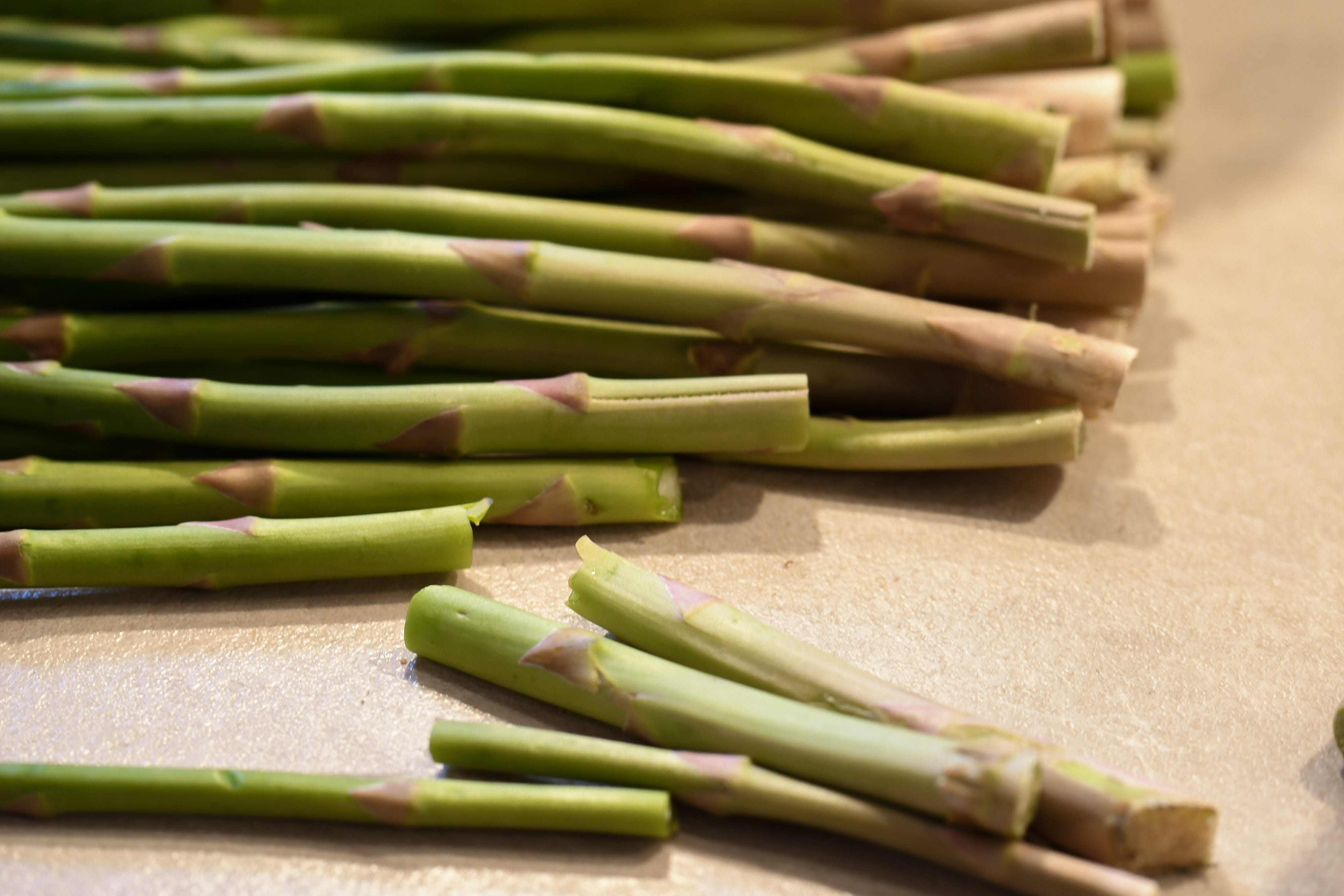
Place the asparagus into a roasting pan or baking dish. Scatter over the nuts and, if using, the chicken tenders. Drizzle generously with olive oil and season with salt, pepper, and chili flakes.
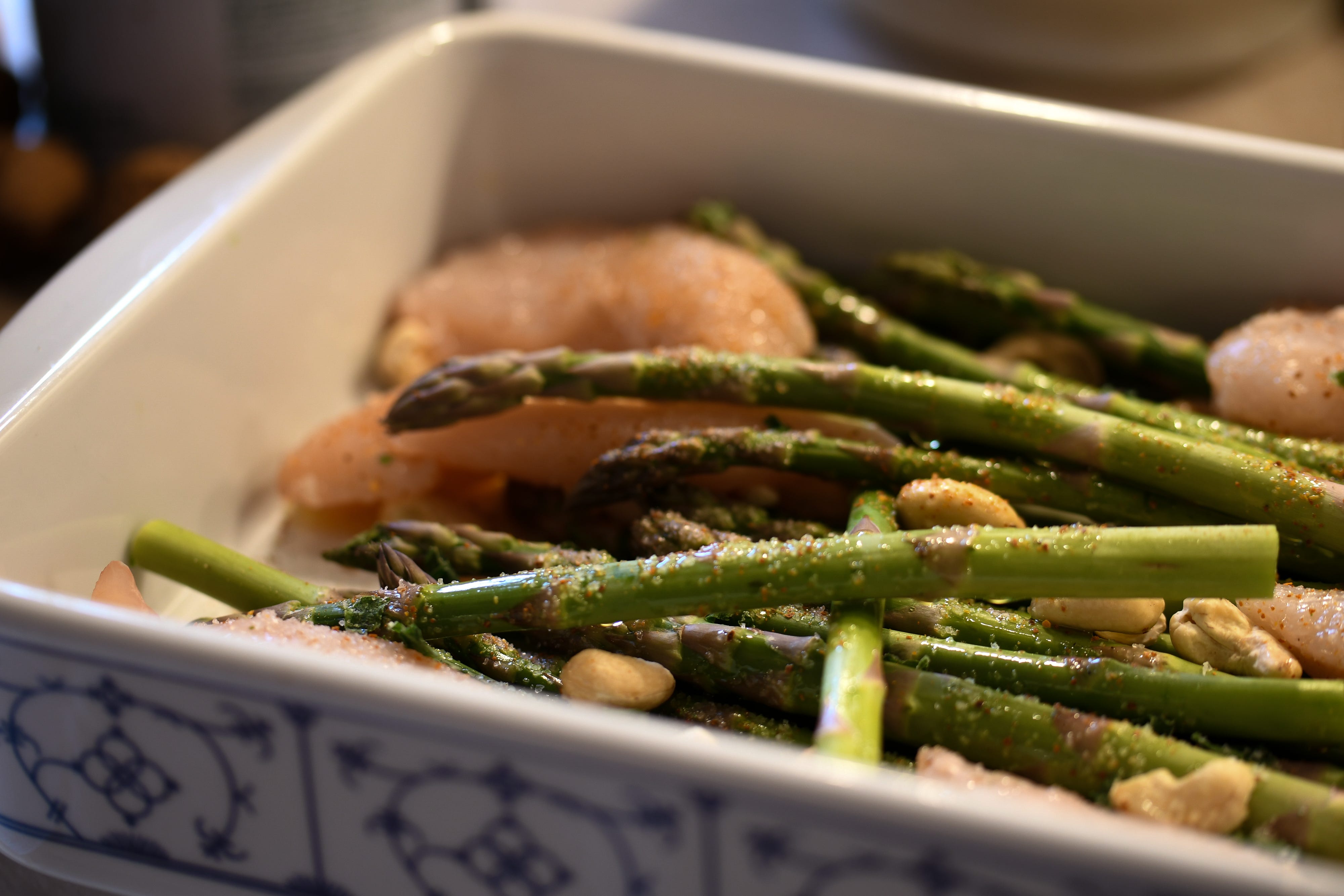
Roast for 10–15 minutes, depending on the thickness of the asparagus and whether you are adding chicken. The asparagus should be tender but still bright and lively, the nuts lightly toasted, and the chicken cooked through.
Scatter over fresh chervil, garlic scapes, and/or tarragon—all lovely spring herbs that pair beautifully with asparagus.
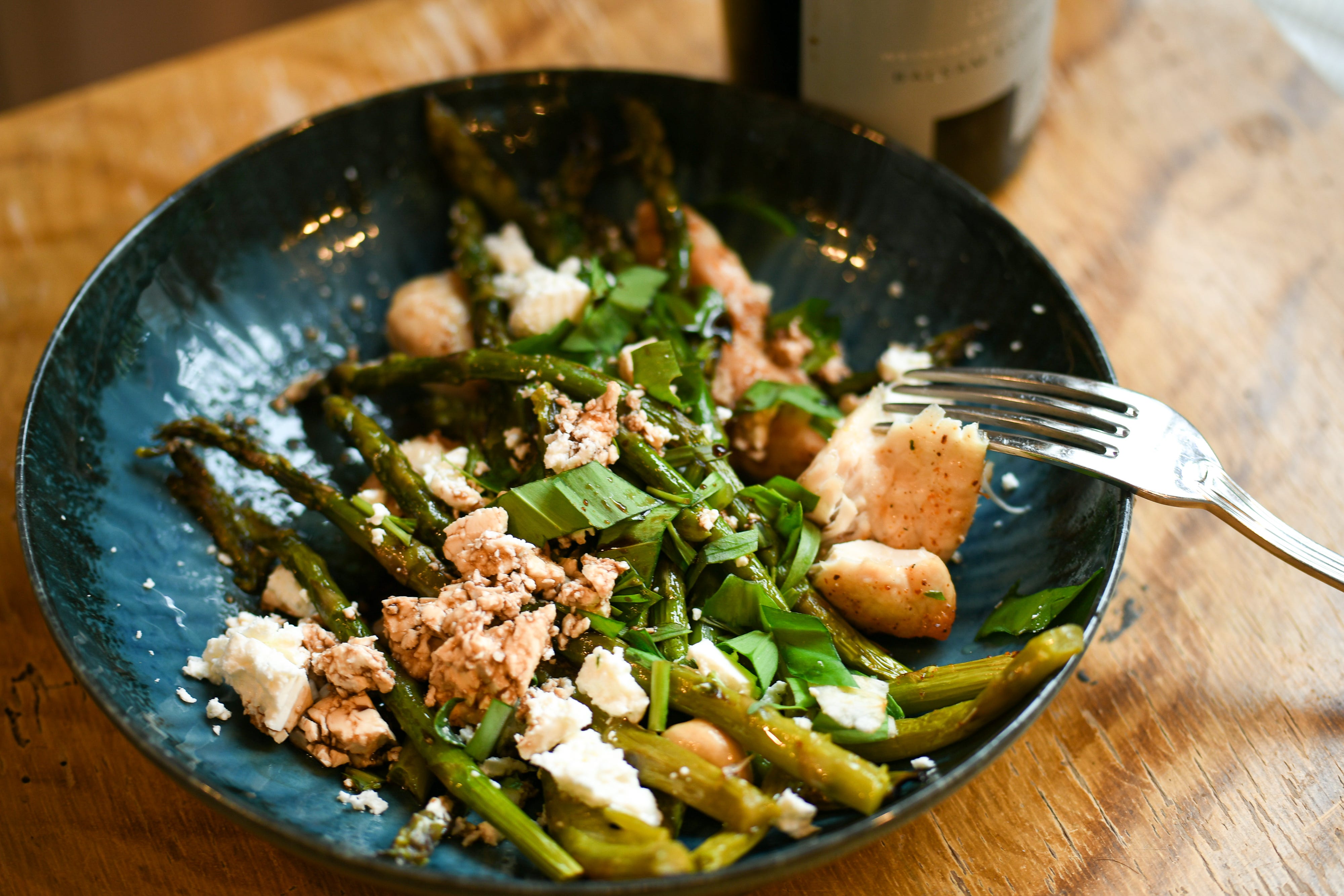
Finish with a crumbling of cheese, a drizzle of really good balsamic vinegar and serve warm.
Dinner is ready!
Now, back to that cookbook writing….
My asparagus will start coming in any day now - ours generally starts a month later than in Germany. In the store, the spears will all be the same thickness. But in one's garden, you get fat ones, medium ones and skinny little ones. I line them up like little soldiers, the fat one goes into the steamer first, followed by the medium ones a minute later, and the skinny ones get barely blanched. Only for asparagus will I get that precious about my cooking! At the end of June, the plot starts to grow into an asparagus forest, five feet tall, and the cats love to lay inside it on hot days. People passing ask me what that plant is. They only know the store asparagus, they have no idea how tall and bushy it gets. And while the flowers are unremarkable, the bees love them!